Skin concerns are generally small — but not always small-feeling. A tiny mark. A raised area. A subtle change in texture. These are the kinds of concerns people often learn to live with, adjusting around them, convincing themselves it is not significant enough to address. But even a little thing can feel heavy when it lingers for years. Cryosonic Treatment offers a calm, guided path forward.

Cryosonic Treatment is not rushed. There is no feeling of urgency or pressure to move forward before you are ready. It is not overwhelming — the process is clear from the beginning, and nothing feels like it pulls you into something difficult or uncertain.
Rather than being clinical or complicated, this is a treatment that feels measured and thoughtful. A precise, simple approach that only treats what needs to be treated — no more, no less, as seen at Cryosonic Hythe. It works with your skin in a way that is natural and gradual, allowing it the time it needs to heal and regenerate.
At every step, the experience is designed to feel manageable. You are not required to know everything upfront. You are not pressured into decisions. Instead, you are simply walked through it — step by step, in a way that is clear, honest, and reassuring.
"Sometimes small concerns do not need big solutions. Sometimes it just takes the right approach — one that feels steady, calm, and in line with you."
At its heart, Cryosonic Treatment is a precise, carefully directed way to work with the skin rather than against it. This treatment involves delivering a targeted jet of sub-zero gas over the area to be treated. This extreme cold crystallises the unwanted tissue at a cellular level, disrupting its structure and halting its function. After this, the body naturally begins to identify the treated tissue as no longer needed and gradually clears it away over time.
Treatment is not spread across the skin surface. It is focused exclusively at the appropriate issue, deployed in a deliberate and precise manner. This preserves the great majority of the skin surrounding the treatment site.
The cold reaches the targeted tissue at a cellular level, disrupting what needs to be addressed. The healthy skin around it is preserved. That precision is what brings real control to what could otherwise feel invasive.
When the treatment is complete, the body's natural healing process takes over. The treated tissue begins to dry out, a small crust or scab forms, and eventually peels away. Below, new healthy skin forms as part of the body's own regeneration.
There is no surgical intervention involved. Nothing that requires complex recovery or extended time away from everyday life. It is a simple, controlled process that gently prompts change — allowing the skin to heal itself in a way that feels gradual and balanced.
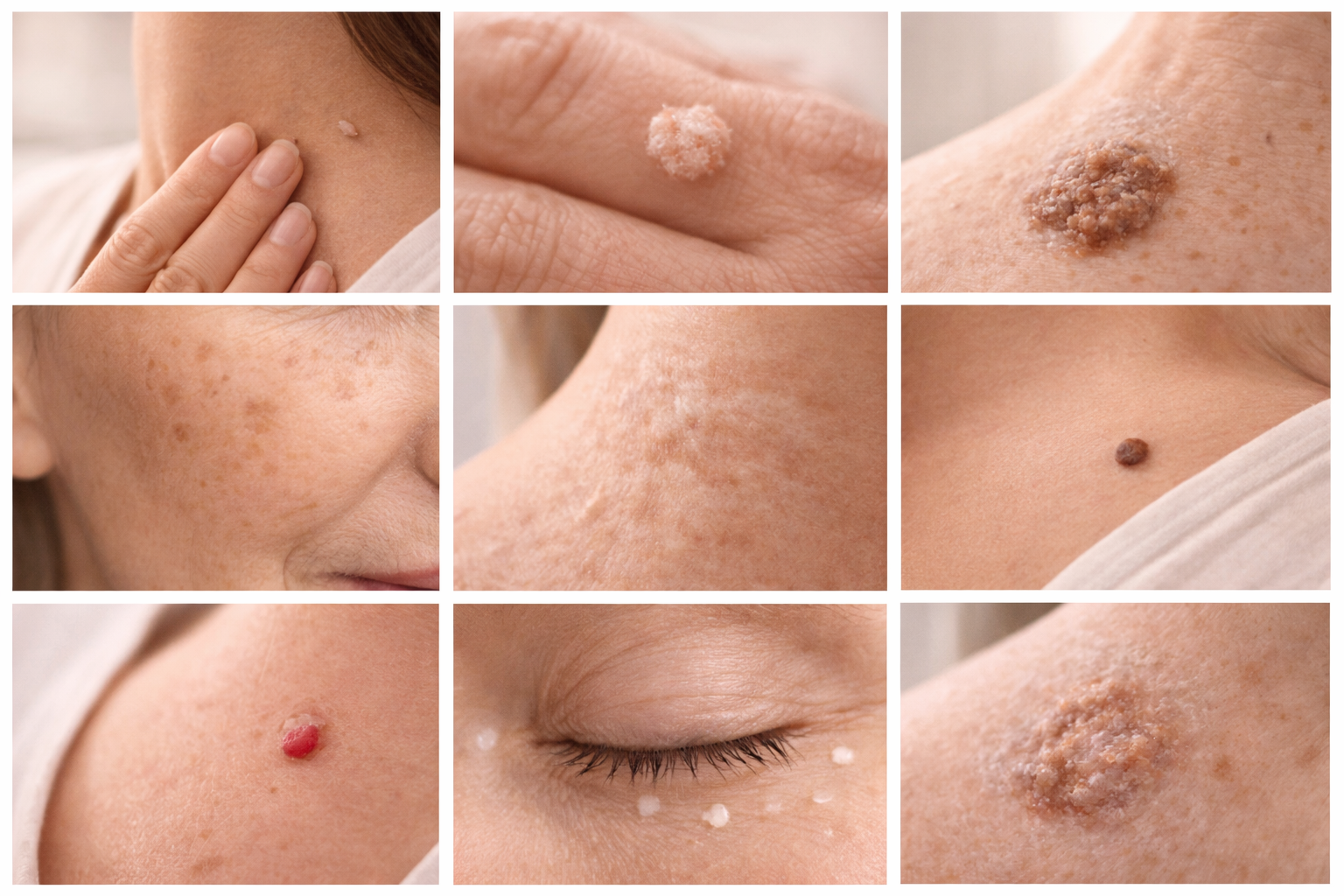
Cryosonic Treatment can address a wide range of common benign skin conditions. These are concerns that many people experience at some point in their lives. While they are largely benign from a medical standpoint, they can still affect comfort, confidence, and how you feel from day to day, as seen with Cryopen Service in Leighton Buzzard. It is not only the condition itself that matters — it is how it impacts you.
Every condition is treated with thoughtfulness, compassion, and careful attention. There is no one-size approach, and no assumption made about how any concern will present. Each case is considered individually, taking into account its type, size, location, and how it appears on your skin.
Skin tags are soft growths that tend to form in regions where skin naturally folds or rubs together — the neck, underarms, or eyelids. They cause no harm, but they may snag on clothing or jewellery and become bothersome over time. What begins as something small can grow into something you notice far more often than you would like.
Warts are caused by a viral infection in the skin and can appear on the hands, fingers, or elsewhere on the body. Left untreated, they can spread and may feel rough or raised. Many people attempt home treatments, but these are not always effective — particularly for more persistent cases.
Verrucae are warts that appear on the soles of the feet. Because they sit on weight-bearing areas, they can become uncomfortable or even painful when walking or standing. They can persist for extended periods and are often difficult to address without targeted professional treatment.
Age spots are patches of pigmentation that appear over time from sun exposure. They are most often found on the face, hands, shoulders, and arms. Though benign, they can affect the evenness or youthfulness of the skin and may become more pronounced as the years pass.
Sun damage can also appear as uneven skin tone, pigmentation, or rough textured patches. These changes develop gradually over time and tend to be more visible on areas frequently exposed to sunlight — such as the face and hands. They are among the most common concerns people find harder to ignore as they age.
Moles are a normal part of the skin and are usually benign, but some can be raised, irregular, or found in areas where they catch attention or cause irritation. When properly assessed and confirmed to be non-cancerous, they can be safely treated for comfort or cosmetic purposes.
Cherry angiomas are small clusters of tiny blood vessels close to the skin surface, creating a red or purple spot. They typically develop with age and can increase in number over time. Their colour — though harmless — can cause them to draw more attention than other features on the skin.
Milia are tiny, white cysts that form just beneath the skin surface, commonly appearing around the eyes or cheeks. Unlike regular blemishes, they do not clear on their own and can persist for extended periods without visible change — making them difficult to manage without professional intervention.
Actinic keratoses are rough, scaly patches resulting from years of sun exposure. They can feel dry or textured and are typically assessed carefully before treatment to determine the most appropriate course of action. They are among the conditions that benefit from professional evaluation before proceeding.
Dermatofibromas are firm bumps that can form after minor skin trauma such as insect bites or small cuts. They are harmless but can feel different from the surrounding skin and may become more noticeable over time — particularly in areas where the skin is smoother.
Seborrheic keratoses are generally harmless, non-cancerous growths that can appear waxy, raised, or slightly textured. They typically develop gradually with age, vary in colour and size, and may become more conspicuous in visible areas over time.
Freckles are small pigmented spots that become more pronounced following sun exposure. While they are a natural part of the skin for many people, those looking for a more even or uniform skin tone may find that treating them makes a meaningful difference in how they feel about their appearance.
Angiofibromas are small, firm lumps that commonly appear on the face. They pose no medical harm but tend to be quite stubborn and prominent — particularly in areas where the skin appears clear and smooth, making them stand out more than they would elsewhere.
Molluscum contagiosum is a viral skin infection that produces small, raised bumps. It can spread through contact and may persist for a long time if left untreated, making it both a practical and cosmetic concern. Professional treatment offers a more effective route to resolution.
Porokeratosis presents as areas of abnormal skin that often have a defined border. These patches can feel different in texture as well as appearing visually distinct from the surrounding skin, and they are typically assessed with care before treatment is administered.
Each of these conditions is approached with its own unique consideration. Treatment is tailored to the type of concern, the area of the body, and the individual's skin response. While the conditions themselves are widespread, the way they are experienced — and therefore the way they should be treated — is entirely personal.
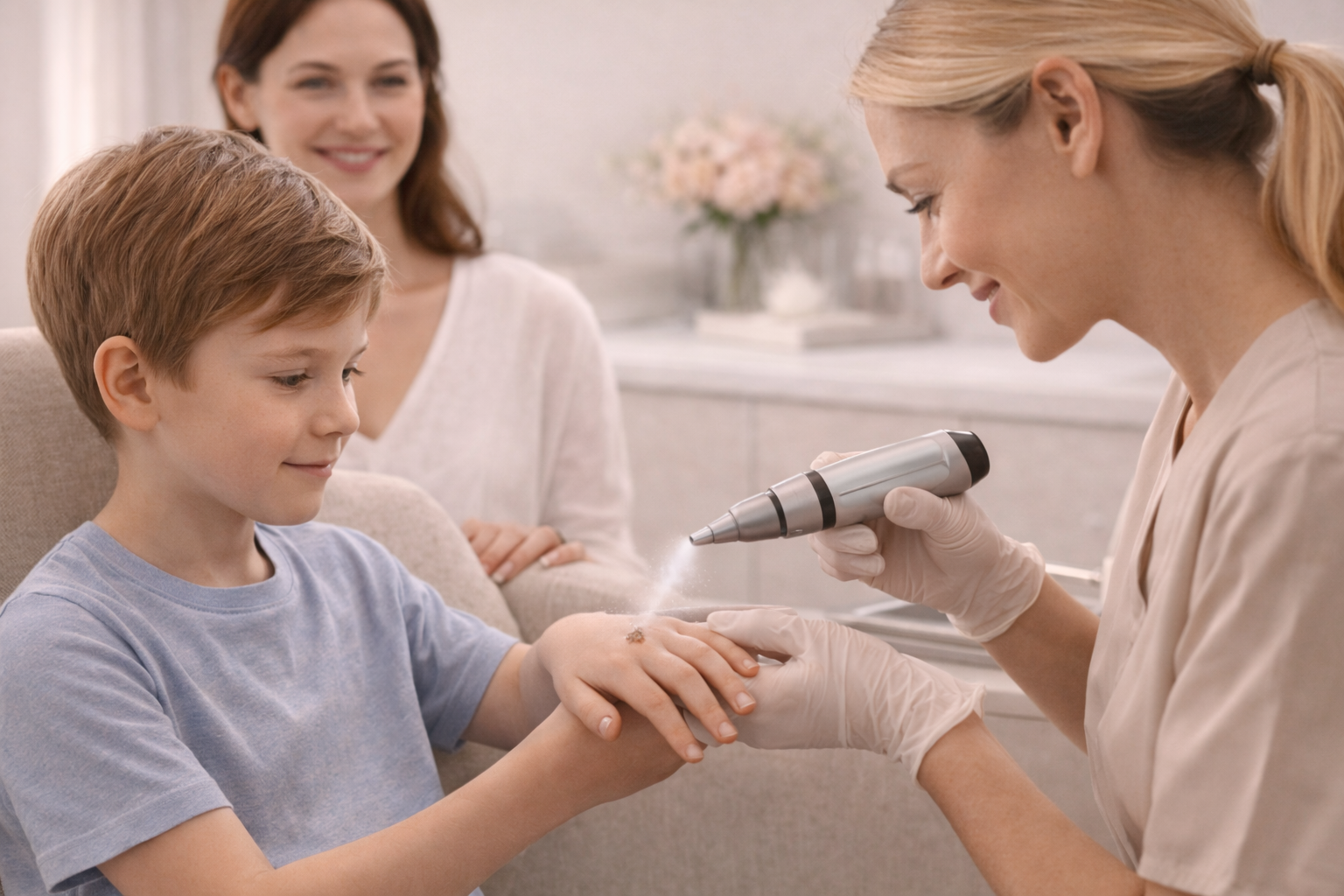
Cryosonic Treatment is also appropriate for children, and is particularly suited to common concerns such as warts, verrucae, and small non-cancerous lesions. These are conditions that can sometimes persist longer than expected in younger skin. While they do not always cause significant discomfort, they can be frustrating over time both for the children who have them and for parents trying to find the right way forward.
What matters most in these situations is not the treatment itself, but how the entire experience feels from beginning to end. Children are sensitive to tone, pace, and how things are explained to them. That is why the approach is always gentle, patient, and carefully managed.
Parents are guided at every step, with straightforward guidance about what to expect, how the skin will heal, and how to care for the area afterward. When both the child and the parents feel reassured and well-informed, the entire process flows more smoothly — and what can feel like a persistent, worrying concern is resolved in a way that feels calm, manageable, and quietly reassuring from start to finish.
The treatment involves a controlled jet of cold gas applied directly to the skin concern. This flash-freezes the targeted cells, interrupting their function and prompting the body's natural healing response. What follows is a gradual, organic process — the body disposes of what is no longer needed, and the skin regenerates naturally in its place.
A fine, targeted jet of sub-zero gas is applied directly to the treated area for a brief period. The extreme cold crystallises the unwanted tissue at a cellular level, disrupting its structure without affecting the skin around it. You may feel a sharp, cold or stinging sensation — this is temporary and settles quickly.
Immediately after application, the area may look briefly red or slightly raised. Some warmth or mild tenderness may be present for a short period. These are normal signs that the treatment has reached the right tissue and that the body's own healing process has already begun.
In the days following treatment, the area begins to change in predictable ways. A small blister or crust may develop. The treated tissue dries out and begins to separate. This is a normal and expected stage of the healing process — a sign that everything is progressing as it should.
Beneath the surface, new healthy skin gradually forms as part of the body's natural regeneration process. The treated area settles, clears, and over the course of one to six weeks, blends naturally with the surrounding skin. The end result is subtle and genuine — not contrived or dramatic.
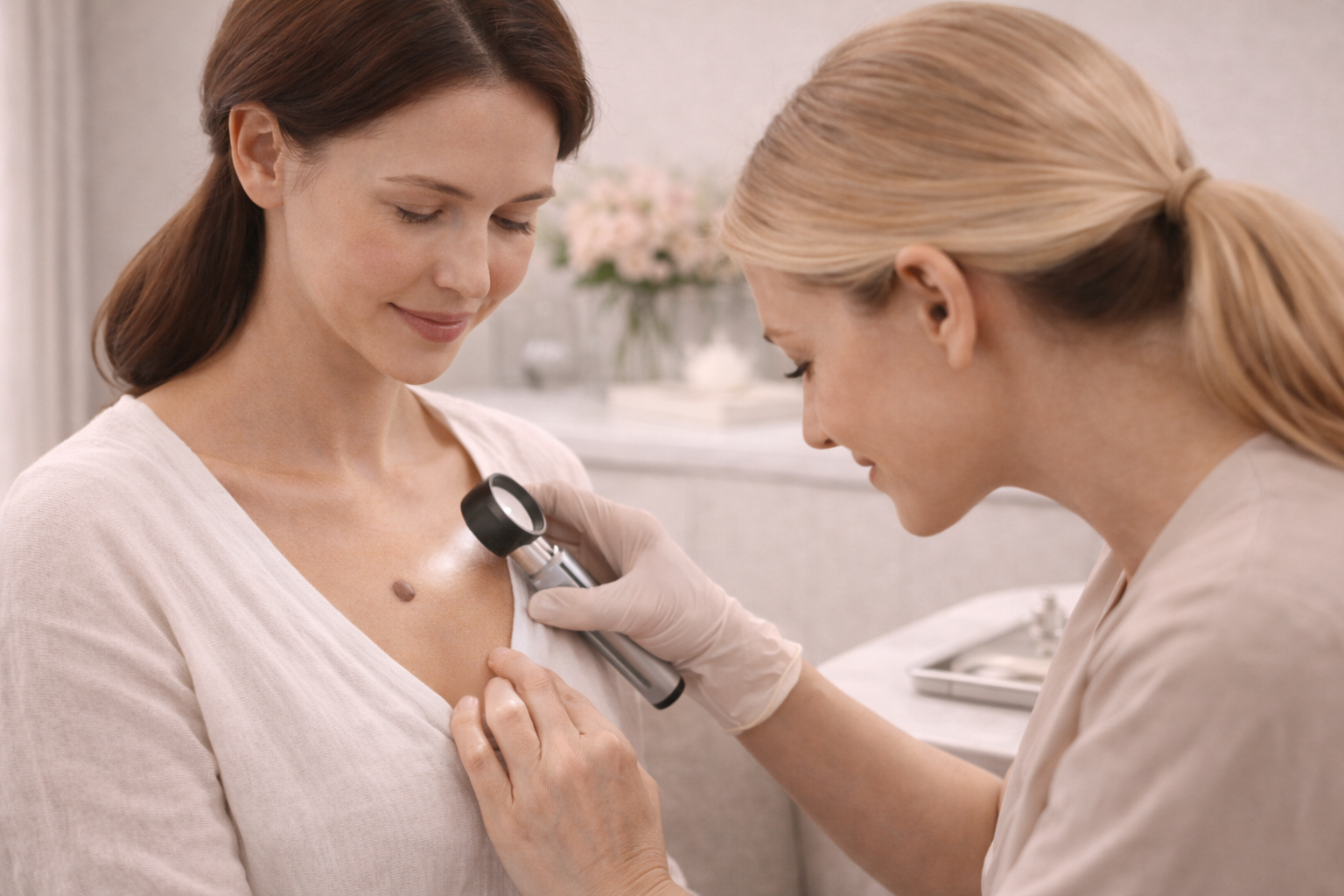
All treatments start with a consultation. This is not a step taken lightly or treated as a formality. It is a slow, unrushed conversation designed to provide clarity, understanding, and confidence, as reflected by Cryopen Service in letchworth, so that if anything does move forward, it does so with direction and purpose.
This is your moment to pause and look closely. To understand what is present — and what can be done about it. You are not expected to arrive with answers. You simply have the space to ask questions, to express what you have noticed, and to explore your options at your own pace.
There is zero pressure to proceed. You are not expected to decide on the spot, and you are not pushed in any direction. Rather, you are given the time to consider, to understand, and to act only in a way that feels right for you.
Because when things are clearly explained and you feel genuinely supported, the whole process begins to feel lighter. Uncertainty gives way to clarity. Hesitation becomes confidence. And from that point, whatever step you decide to take feels considerably easier to make.
Cryosonic Treatment can be used for benign skin concerns across most age groups. It is particularly well suited to those looking for something that feels viable, simple, and non-invasive. For many people, choosing a treatment is not only about removing a skin concern — it is about finding an approach that feels manageable and comfortable from the very beginning.
For anyone who wants results without cutting, stitching, or surgical procedures — this treatment provides a gentle, effective alternative that feels nothing like conventional intervention.
If fitting recovery time around a full schedule feels overwhelming, this treatment requires no significant downtime. Most people return to their normal day immediately after the session.
Many people come in having sat with a concern for months or years. Whether it is something that has gradually become more noticeable or something that has simply never gone away — there is a straightforward path forward.
Treatment is suitable for delicate or visible areas, including the face and neck. The precision involved means even sensitive regions can be addressed carefully and with appropriate consideration.
For children with stubborn warts or verrucae, the approach is always gentle, well-explained, and managed at the child's own pace — with parents kept fully informed every step of the way.
For many, the decision is not clinical — it is personal. It is about feeling more comfortable in their own skin. That is reason enough, and it is approached with the same care as any other concern.
All cases are assessed individually. Because while many skin concerns are common, the way they are experienced is entirely personal — and how they are treated should reflect that.
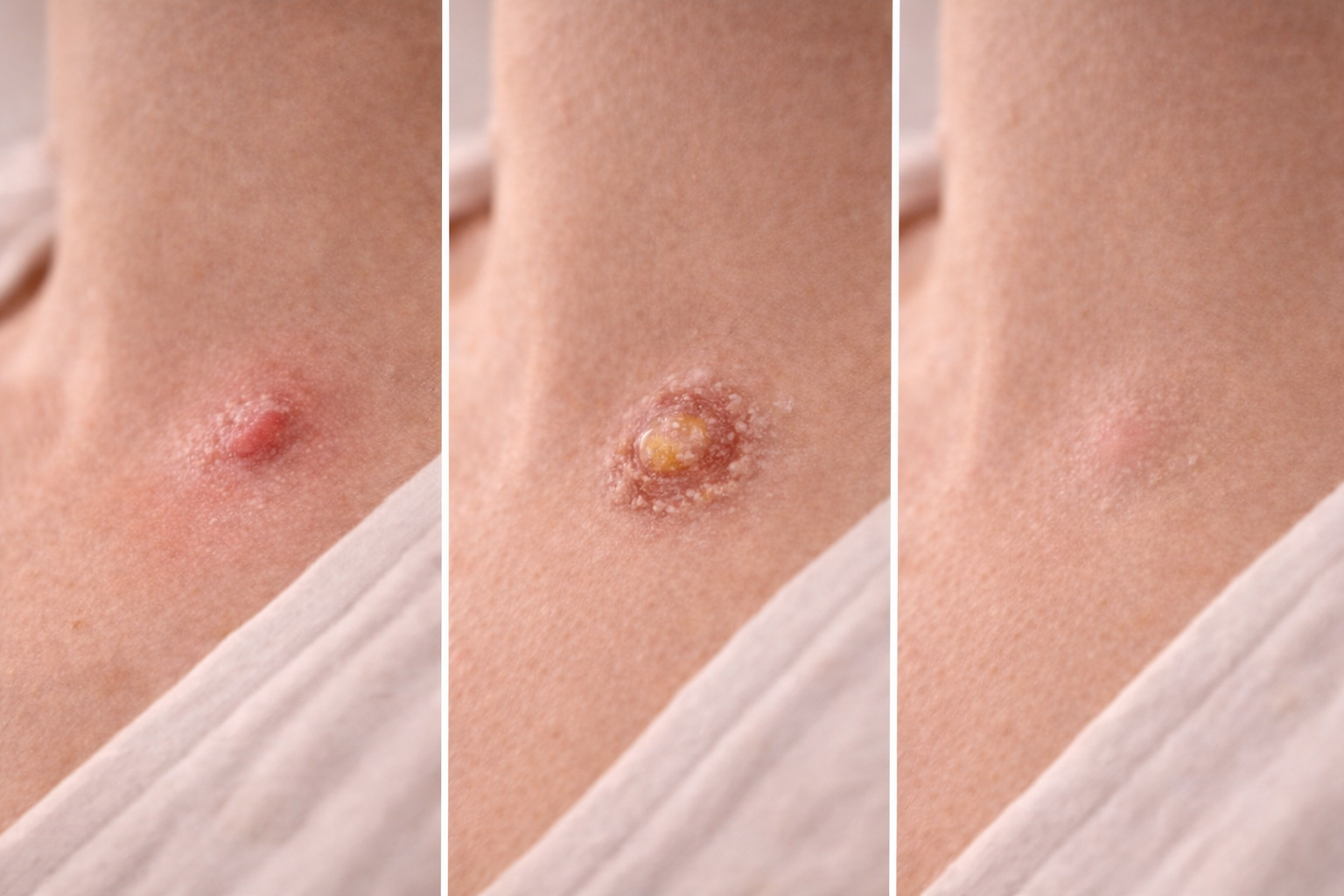
Aftercare is uncomplicated, but it plays a meaningful role in achieving the best possible outcome. Following treatment, your skin enters its natural healing phase — slow, steady, and without the need for complicated routines or special products. Healing does not need to be hurried or forced. Each stage has a purpose, and every step brings the skin a little closer to a smoother, more natural outcome.
After treatment, it is normal to see some expected changes in the treated area. These are not causes for concern — they are signs that the healing process has begun and is progressing as it should.
The most effective aftercare is also the simplest. The skin heals best when it is given time and space to complete its natural process without interference.
These are the questions that come up most often — things people naturally wonder about but do not always voice aloud. Having clear answers helps the whole experience feel more predictable, more comfortable, and far easier to approach.
Skin concerns have a quiet persistence. They sit in the background of everyday life and become part of a routine — never quite fading from view, but adapted to in small, unconscious ways. You stop noticing them constantly, but not completely. They return to awareness in brief, unguarded moments — a glance in the mirror, a particular light, an ordinary interaction.
Cryosonic Treatment offers a path for addressing those concerns without complicating or overwhelming the experience. It does not require a dramatic decision. It does not impose additional abstraction. It simply provides a clear, straightforward way forward.
It is simple in the way it is explained, understood, and carried out. It is precise in the way it targets only what needs attention. It is guided — so you are never left wondering what is happening or what comes next. And perhaps most importantly, it honours your pace. There is no urgency, no pressure to decide quickly, and no expectation placed on you before you feel ready.
Because sometimes it is not about a grand change. It is about gently guiding away something that need not be there anymore. And quietly, steadily, that shift begins to take place. What was once noticeable starts to feel less so. What once pulled your attention begins to recede. That thing you had learned to live with simply does not exist in the same way as it once did.
You may not notice the exact moment it shifts. But you do notice how it feels afterward — lighter, easier, and more like yourself again. And sometimes, that is exactly the only thing you need.